
Key Takeaways:
- Wildfire smoke can seep into a home through open doors and windows, HVAC systems, or small cracks and gaps, affecting indoor air quality even if the home is outside the fire zone.
- Smoke particles can be absorbed into porous materials, causing damage to the materials themselves and affecting the health of anyone who inhales them or has skin contact.
- Professional smoke damage restoration includes improving the air quality with industry-grade tools, removing soot and other debris, and thoroughly cleaning the area.
In Southern California, peak wildfire season runs from July to November—but as homeowners and business owners here know, wildfires can wreak havoc any time of year. While homeowners are all too familiar with fire safety protocols, some may not realize that most smoke damage cases come from homes that were never impacted by the flames themselves. Even if you don’t get an evacuation order, you may be wondering: Is my home safe from wildfire smoke?
At Flood Response, we understand the enormous stress that comes with living in or near a wildfire-prone area. Our restoration specialists put your safety first by addressing every aspect of fire damage, including smoke and soot. To help you prepare for this year’s wildfire season, we’re discussing how wildfire smoke gets into your home, how it interacts with your surfaces and belongings, and what to do about it.
How Wildfire Smoke Gets Into Homes
Even if a wildfire is burning miles away, the resulting smoke can still travel into your neighborhood and accumulate around and inside your home. According to the EPA’s Emergencies IAQ page, there are three main ways wildfire smoke enters indoor spaces:
- Natural Ventilation: The most common form of natural ventilation is air that comes through open windows and doors. Wind is a driving force of natural ventilation.
- Mechanical Ventilation: This includes bathroom or kitchen fans, HVAC systems, and any other equipment that brings outdoor air inside.
- Infiltration: Smoke can enter through small gaps and cracks around doors and windows, as well as similar openings in the home.
Taking proactive measures to seal your home can help prevent infiltration. Sealing doors, windows, and gaps around vents and pipes, along with running a portable air cleaner in main living spaces, can reduce how much smoke makes it indoors. Keep an eye on your local air quality index and wildfire alerts in and near your area, so you know when to seal up the house versus when it’s safe to ventilate again.
What Smoke Particles Do to Home Surfaces
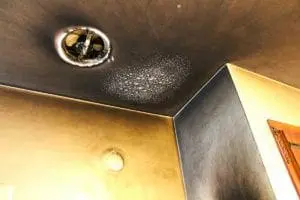
Smoke consists of gases and fine particles produced when wood and other organic materials burn. Smoke damage is a distinct category within fire damage restoration, separate from the structural destruction caused by flames themselves. Along with staining materials and leaving odors behind, smoke particles can absorb into materials, cause gradual material damage, and become a health hazard if not addressed.
In a 2025 study, air chemistry researchers at the University of California, Irvine, found that porous indoor surfaces absorb and hold volatile organic compounds (VOCs) for up to one year. This presents health risks for people who not only inhale the smoke particles but also absorb them through skin contact. VOCs can remain in painted surfaces, wood, and even concrete, causing invisible harm if not identified and addressed.
Smoke particles can damage non-porous materials, as well. Soot residue—the powdery substance that’s left behind after incomplete combustion—can corrode metal fixtures, appliances, and electronics over time. This can shorten the lifespan of affected appliances and lead to costly repairs.
HVAC and Air Duct Contamination After Wildfire Smoke
One of the key purposes of an HVAC system is to improve indoor air quality. But if your system is set to the wrong setting or your filter is overloaded during a nearby wildfire, it could pull soot and smoke particles from outside into the home. This is one of the most common causes of HVAC contamination and degraded air quality in Southern California homes.
Signs of HVAC and air duct contamination include:
- A lingering odor when the HVAC runs
- Visible soot on the vents
- A clogged or blackened filter
- An increase in physical health symptoms, such as coughing or eye irritation
The EPA recommends purchasing a high-efficiency HVAC filter with a MERV 13 rating if it is appropriate for your system. You can consult a professional HVAC technician for an individualized recommendation. It’s also best practice to change your filters more frequently during periods of high smoke or when they are especially dirty.
Health Effects of Extended Indoor Smoke Exposure
Wildfire smoke is dangerous because it’s composed of particulate matter—mainly PM2.5, the fine particles that contribute to haze and can cause severe health problems, both immediately upon exposure and in the long term. Worsening asthma and respiratory symptoms, decreased lung function, heart attacks, and other conditions have been linked to particle pollution in several scientific studies, according to the EPA.
During the 2020 wildfires in Oregon, public health analysts collected data on residents to see how they were affected by wildfire smoke. They recorded a 25% increase in the number of people seeking care for asthma-like illnesses across the state. Similar research has been documented elsewhere, including in California, during major smoke events. This is why indoor air quality is crucial, even for houses outside a wildfire’s direct path.
What Professional Smoke Damage Restoration Involves
If you suspect your home’s air quality has suffered due to recent wildfires in or near your area, or if you’ve discovered visible signs of smoke and soot damage, do not attempt cleanup yourself. Only a professional who’s trained in fire damage restoration can safely and effectively address wildfire smoke.
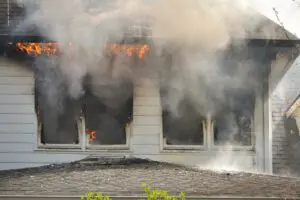
The specialists at Flood Response have the expertise and knowledge required to handle damage done by wildfires. When dealing with smoke damage, we carry out the following process:
- Inspect the Home: First, we do a thorough walkthrough and inspection of your home, noting visible signs of smoke damage and identifying damage beneath surfaces and in the air. During this stage, our team will also help with documenting the damage for your insurance claim.
- Store Belongings: Both repairable and permanently damaged items will be removed from the site before smoke damage restoration begins. Salvageable belongings can be stored safely until the restoration process is complete.
- Improve Air Quality: To clear smoke, restoration technicians may use air scrubbers, thermal fogging equipment, HEPA filtration, and other professional tools to ventilate the area and recirculate clean air.
- Remove Soot and Debris: Our team uses dry-cleaning sponges and specialized soot removers to remove soot and debris.
- Clean Surfaces: After restoring air quality and removing soot, we’ll perform a final cleaning of all surfaces and materials to ensure no debris remains.
- Repair Damaged Structures: Once the smoke and soot have been cleared, we will repair or reconstruct any structures damaged by wildfire smoke.
How Flood Response Can Help
Homeowners both in and near fire zones need rapid home assessments and air quality testing. Since 2002, Flood Response has provided a full range of property restoration services in the Coachella Valley, the Temecula Valley, and the greater Inland Empire.
As one of the leading fire damage restoration companies, we’re proud to offer expert services designed to restore your home quickly, safely, and thoroughly. As an IICRC-certified company, we hold the industry’s highest credential from the Institute of Inspection, Cleaning and Restoration Certification.
Don’t wait to start the smoke removal process. Contact Flood Response online or call us today.
FAQs
When is it safe to occupy my home after a wildfire?
Your home is safe to reenter only after professional indoor air quality testing confirms that PM2.5 levels, VOC concentrations, and soot contamination have returned to acceptable thresholds. Vulnerable individuals such as children, elderly individuals, pregnant women, and anyone who is immunocompromised or has respiratory issues should not reenter until a certified professional issues clearance.
How long does the smell of wildfire smoke linger in a house without professional treatment?
Wildfire smoke odor can persist for weeks to months without professional remediation. Research from the University of California, Irvine, found that porous indoor materials such as wood, painted drywall, and concrete serve as reservoirs for wildfire smoke compounds, with some remaining detectable for up to a year. Eliminating the smell of smoke permanently requires source-level treatment, which may include HVAC decontamination, thermal fogging, and insulation replacement.
Can my home suffer real damage from wildfire smoke even if the fire never reached my property?
Yes, many of the most significant smoke-related losses occur in properties miles from the fire perimeter. After wildfire smoke enters a home, acidic soot residue can corrode metal fixtures, appliances, and electronics, while microscopic particles can embed into drywall, insulation, upholstery, and carpet. Homeowners near, but not in, a wildfire burn zone should have their property assessed after any significant smoke event, particularly if the HVAC system was running during the fire.
Does homeowners’ insurance typically cover wildfire smoke damage?
In most standard homeowners insurance policies, wildfire smoke damage is a covered peril. Coverage typically extends to smoke-damaged structures, HVAC systems, contents, and professional remediation costs, but review your specific policy to ensure coverage. Flood Response not only leads the remediation process but also helps gather industry-standard documentation for your insurance claim.
 Contact