
It should come as no surprise that water damage restoration requires thorough drying. What many don’t realize is that proper drying requires specific techniques and professional-grade equipment to ensure that all moisture is completely removed.
Professional drying requires both air movers and dehumidifiers to fully remove moisture from wood, carpeting, and other interior surfaces. Below, we’ll discuss the essential roles of these devices and why they’re both necessary for successful water damage treatment. Learn how Flood Response handles water damage in Southern California and its surrounding communities.
How Air Movers Dry Water-Damaged Surfaces
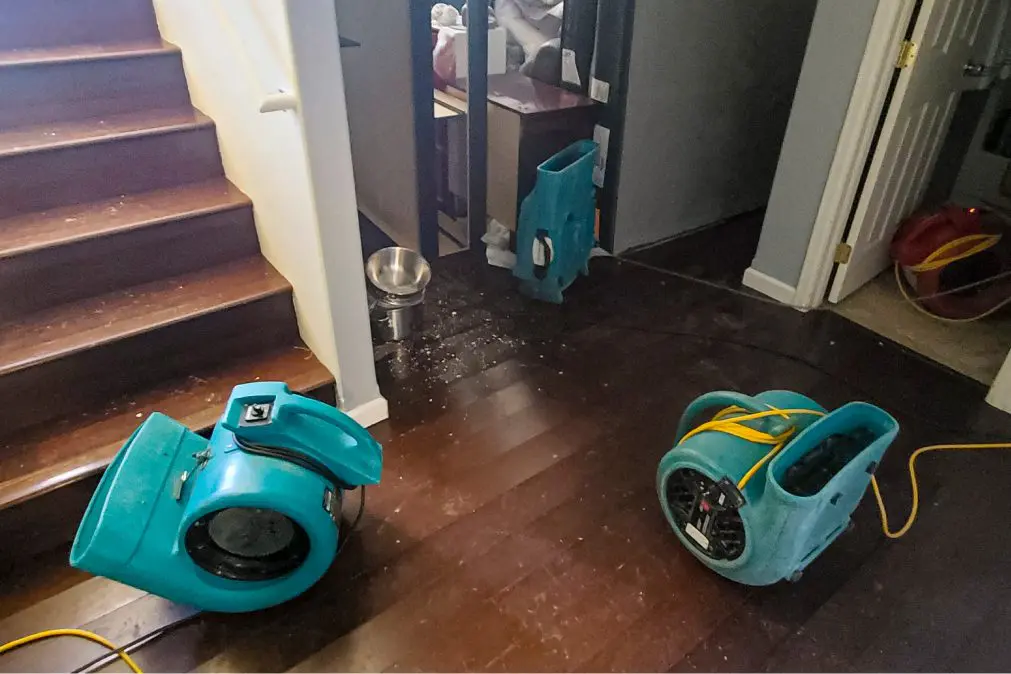
Air movers are powerful machines that circulate air over water-damaged surfaces. Their purpose is to speed up evaporation, which is otherwise too slow to effectively mitigate water damage. Air movers help to reduce drying time, increasing the chance of salvaging affected materials and belongings.
After assessing the site of water damage, technicians will strategically place air movers to maximize air flow. These devices are most effective when used on drywall, carpeting, hardwood floors, upholstered furniture, and similar surfaces.
How Dehumidifiers Remove Moisture From the Air
After air movers circulate air and draw up moisture, dehumidifiers pull in the moisture and remove it, drying the air. Using condensation, a dehumidifier sends air over its cooling coils, where it condenses into water and is stored until it’s drained. The resulting dry air is returned to the interior space.
In addition to treating water damage, dehumidifiers help reduce the risk of mold development. In unventilated environments with high humidity, mold spores can germinate within 24 to 48 hours and develop on moist surfaces, becoming a major problem.
There are two main types of dehumidifiers used for water damage restoration:
- Refrigerant Dehumidifiers: Ideal for moderate-to-warm, humid climates
- Desiccant Dehumidifiers: Best for colder climates and specialized drying situations
Low-grain refrigerant (LGR) dehumidifiers are commonly used by restoration teams because they can reduce humidity more effectively than standard refrigerant models. Your local restoration water damage contractors will determine the best model after assessing your property.
Why Both Air Movers and Dehumidifiers Are Necessary for Drying
A comprehensive drying system ensures the complete removal of water from your property. If only air movers are used during the restoration process, the air may still contain moisture that can later lead to mold development. If a dehumidifier is used but air movers are not, your water-damaged surfaces may not dry properly, leading to greater damage over time.
The machines work synergistically to dry the entire affected area, providing peace of mind that no further damage can occur once the restoration is complete. Using both air movers and dehumidifiers together also prevents delays and keeps the restoration timeline on track.
The Professional Drying Process During Water Damage Restoration
Several factors impact exactly how long professional drying takes. The category and class of water damage can give you an idea of how long it will take. For example, a Class 3 black water emergency may require not only extensive drying but also meticulous sanitizing and disinfecting prior to repairs and reconstruction; the entire job can take several weeks or even months. On the other hand, a Class 1 clean water spill may dry in only a couple of days.
Other factors include how long the water damage has gone untreated, the environmental conditions within and outside of the building, and the types of materials that need to be treated.
The professional drying process includes:
- Removing the standing water
- Creating airflow with air movers
- Drying the air with dehumidifiers
- Tracking the moisture and ensuring its full removal
Water damage restoration teams use industry-grade air movers and dehumidifiers, along with moisture meters and other tracking tools that help measure progress. Air scrubbers and HEPA filters may also be used, in conjunction with air movers and dehumidifiers, to help purify the air.
Choose Flood Response for Water Damage Restoration in Southern California
At Flood Response, our expert technicians understand the stresses that come with property damage. No matter the size or severity of your water damage emergency, we’ll arrive quickly to remove standing water, thoroughly dry the area, and mitigate damage to materials and personal belongings.
Since 2002, our IICRC-trained and certified technicians have restored the properties of families and business owners, helping rebuild their lives in the face of disaster. We work directly with insurance companies, communicating on your behalf so you can focus on recovery.
In addition to water damage restoration, we offer professional services for:
Contact Flood Response online or call us at 760-343-3933 for emergency water removal in Southern California.
 Contact